Project Harness
Gives a project three files: what we’re building, how we’ll check it, and where we left off. Design quality is part of the brief.
Get Project Harness on GitHub Say hello

Things I build for myself.
A weekly reading list that grows with what I know, and what I don’t.
A personal stylist that learns my taste, including everything I’d never wear.
A knowledge graph built from my conversations, interests, values, and refusals.
One Telegram chat for my links, voice notes, and half-formed thoughts.
Studying videos, openings, and audience comments to decide what to make next.
Project Harness, Goal, and Ship. The reusable instructions behind how I build.
A reading app that helps me find the gaps in what I know.
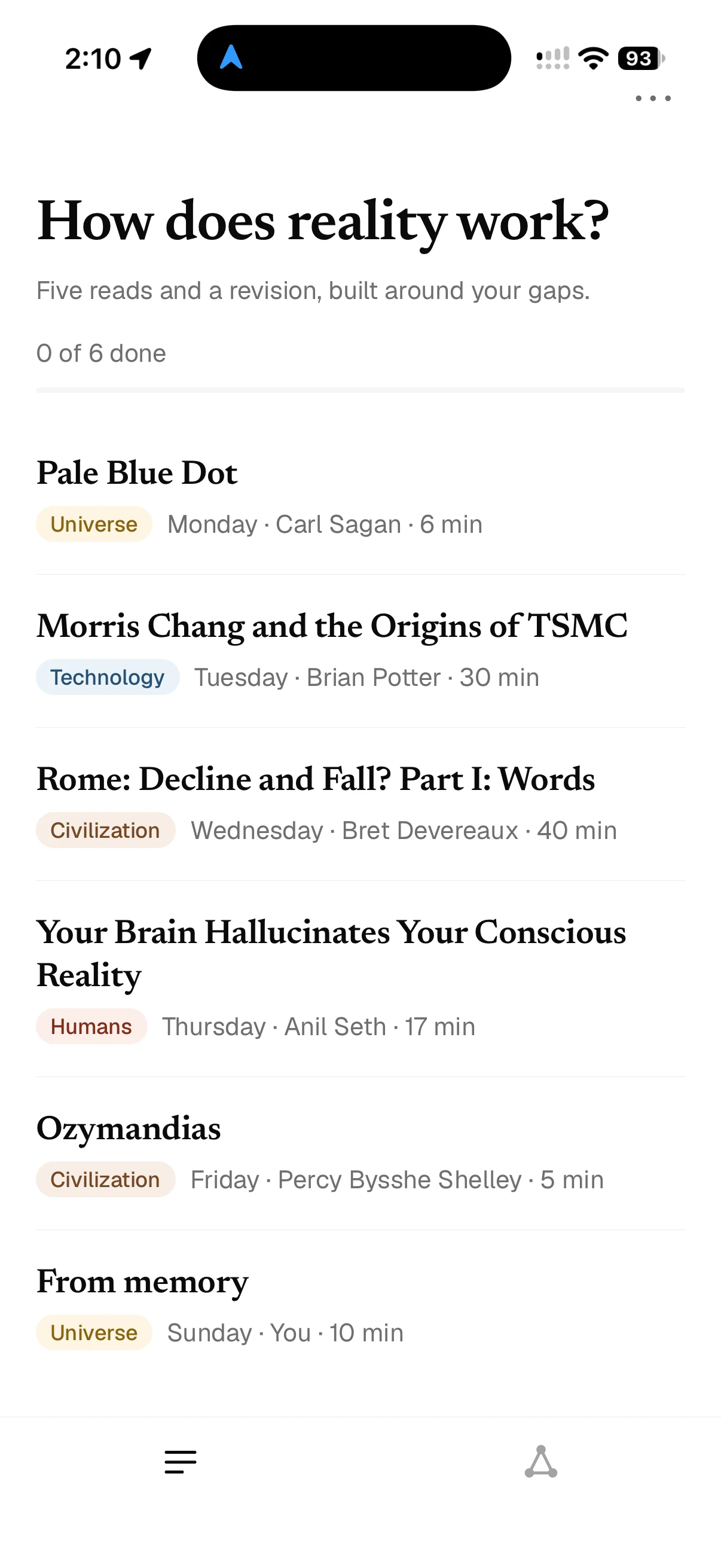
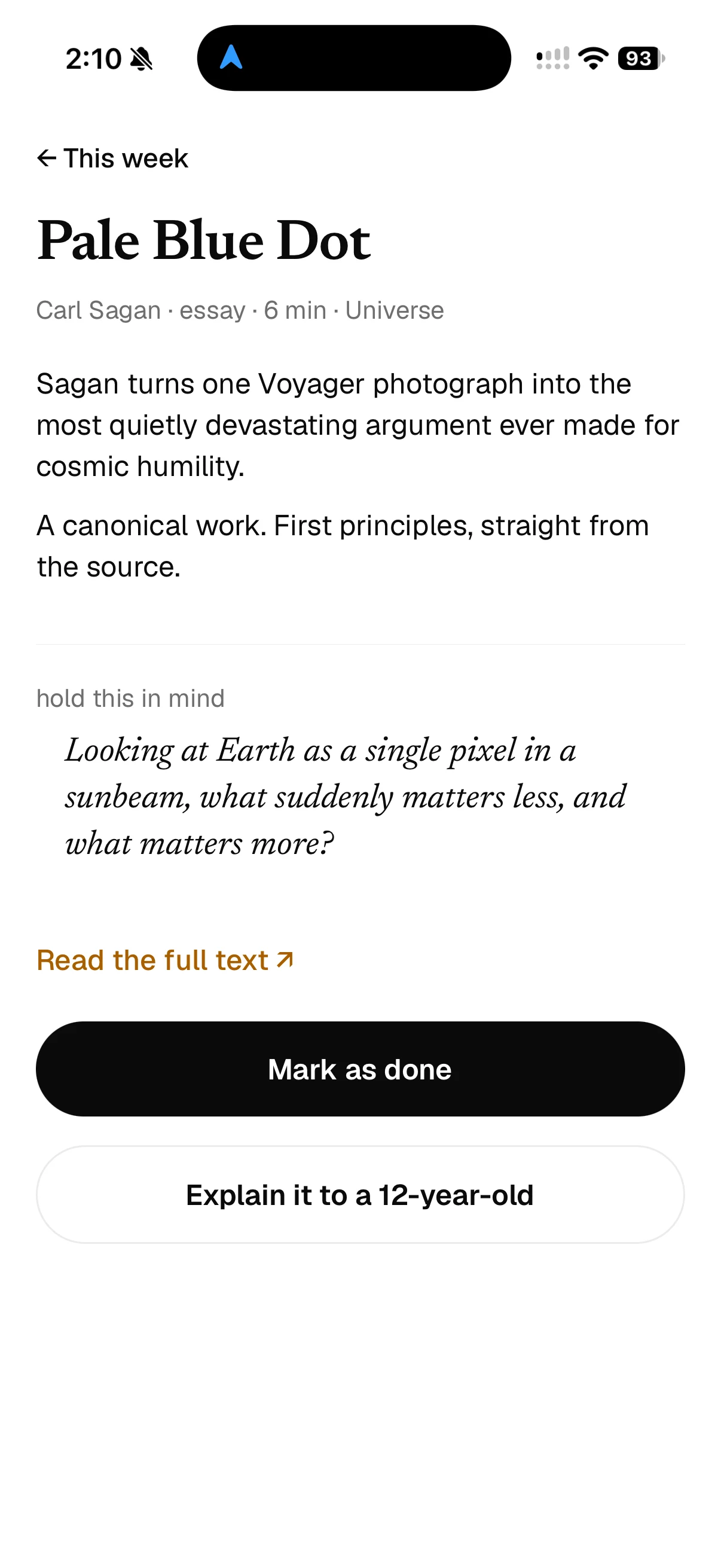
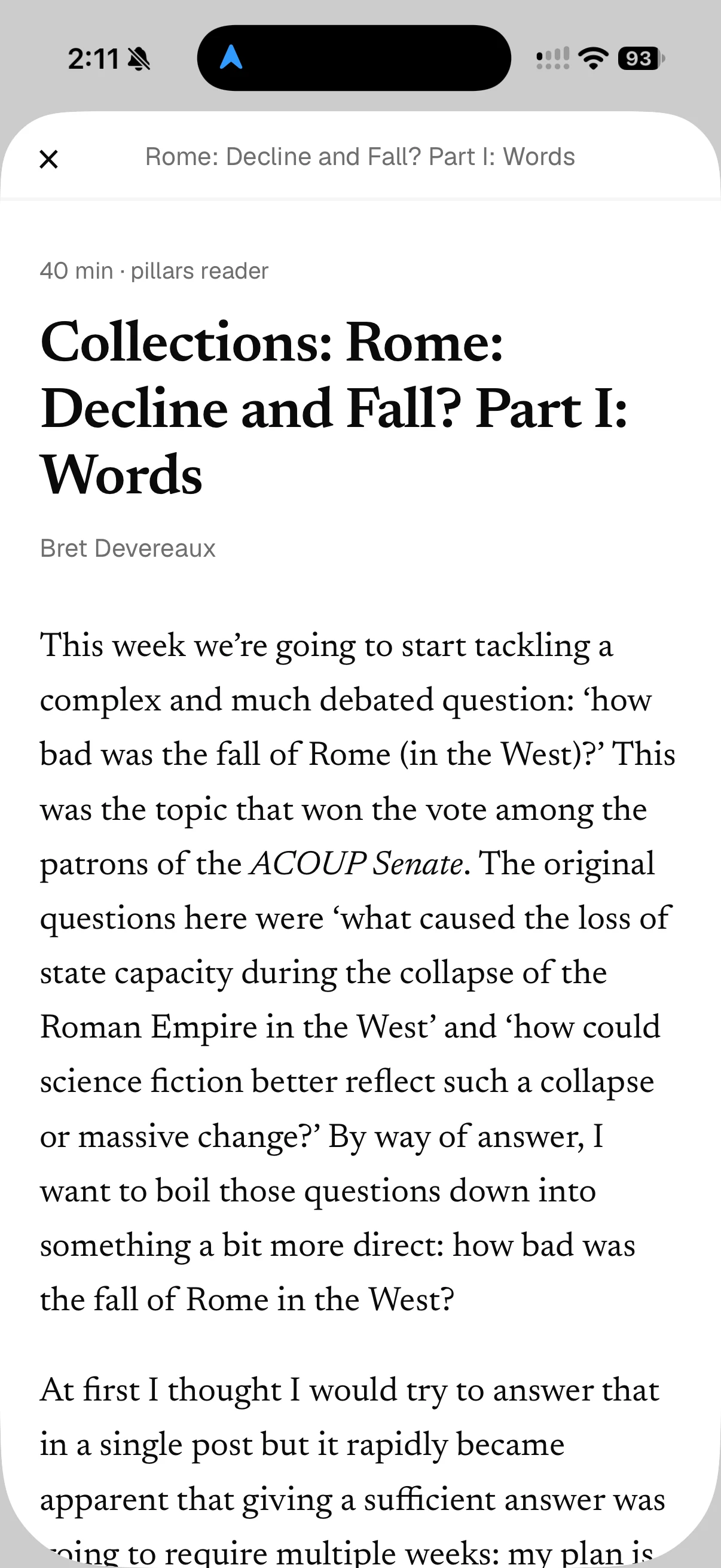
I wanted to understand more of the world without collecting an endless list of things to read. Pillars curates papers, articles, and essays each week, shaped around my interests and the gaps in my knowledge.
There are five readings and a Sunday revision. The week moves between foundational ideas, current thinking, connections across subjects, and something chosen for the pleasure of it.
The learning loop borrows from the Feynman technique: try to explain an idea in plain language, and notice where the explanation falls apart.
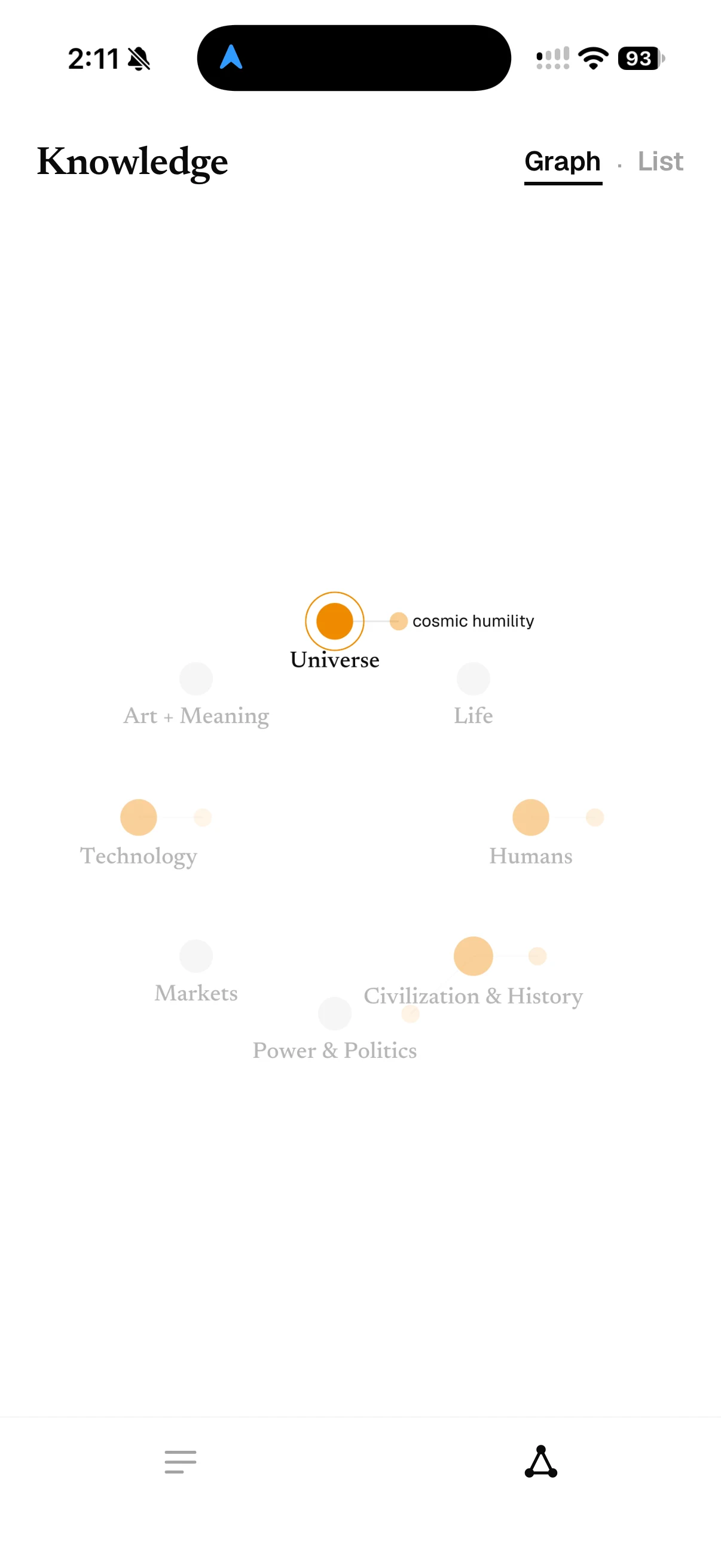
I can save an explanation or note what still feels fuzzy. Those loose ends shape later revision questions and future reading. The knowledge map grows as I read and recall, showing the subjects I return to and the areas I’ve barely touched.
It’s an iOS app I built for my own learning, with a map that keeps changing as I do.
I wanted to see if I could build a model of myself that understood how I think, down to what I’d find funny.

I fed a living wiki my exported chat history, emails, and documents. It extracts concepts and links them together. The chat history gave it the range the other sources were missing.
Everything goes into three buckets:
The shadow turned out to matter most. Knowing what I’m not made its predictions of what I am much more reliable.
I asked whether I’d laugh at a misogynist joke in a room that was 80% men. It read across my humour, values, and notes on how I act in a room, including the less flattering parts.
“I’d just go flat. Blank face. Not laughing reads loud in a room of 80% men, that’s the whole point.”
That’s exactly what I’d do. Seeing it find that answer was the first time I thought this could work.

This started with a question about social networks: could a version of you find the people and information you care about, without you spending your day on a feed?
I called the matching concept the Social Dark Pool: representatives test a conversation privately before bringing an introduction back to the people involved.
The clone is one piece of that idea. It’s a model of one person; it doesn’t prove that two people would connect. I needed a smaller matching problem I could actually test, so I started with my taste in clothes.
That became Styled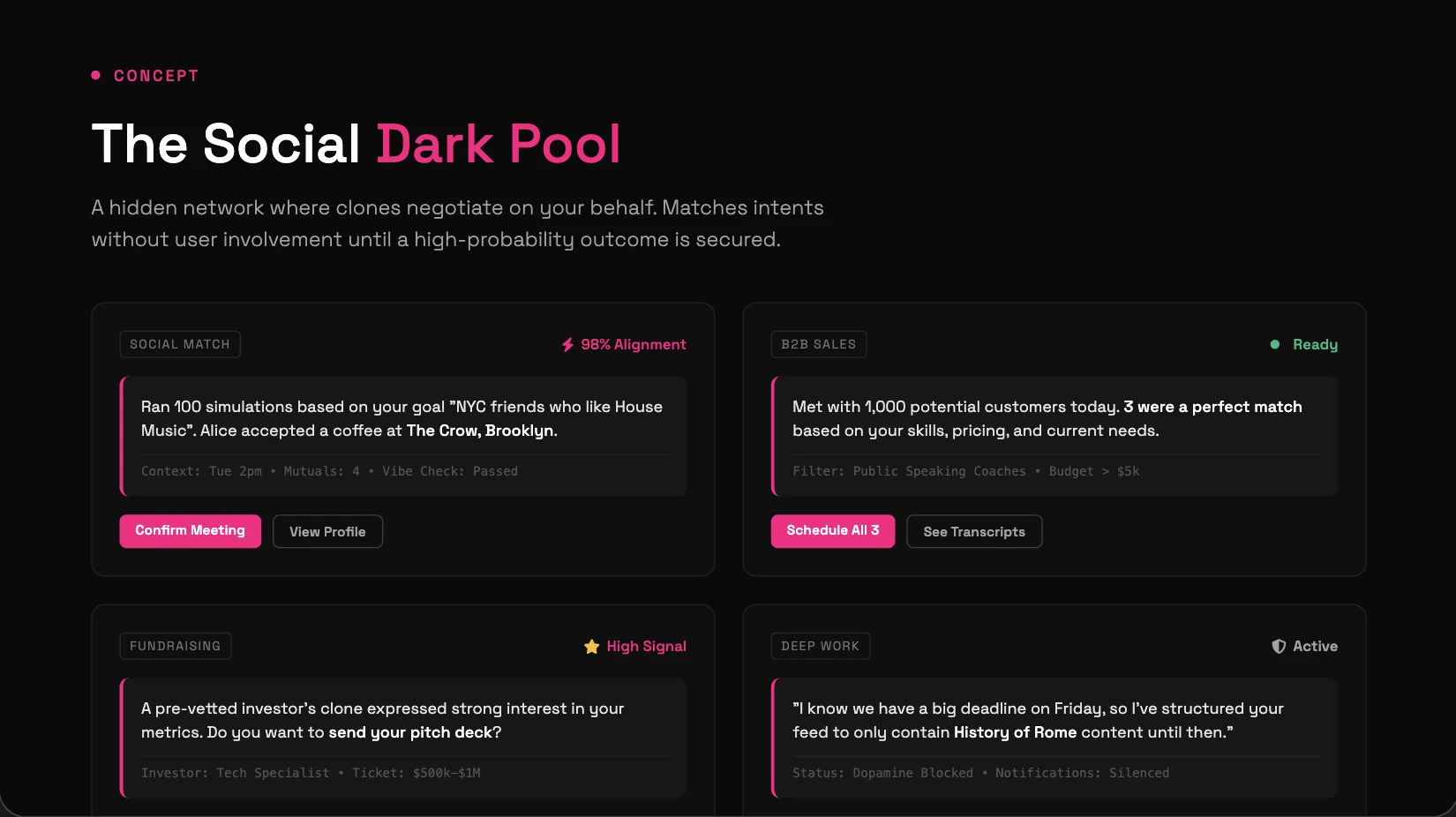
I took the fashion part of my clone and gave it a job: find the few things I’d actually wear.
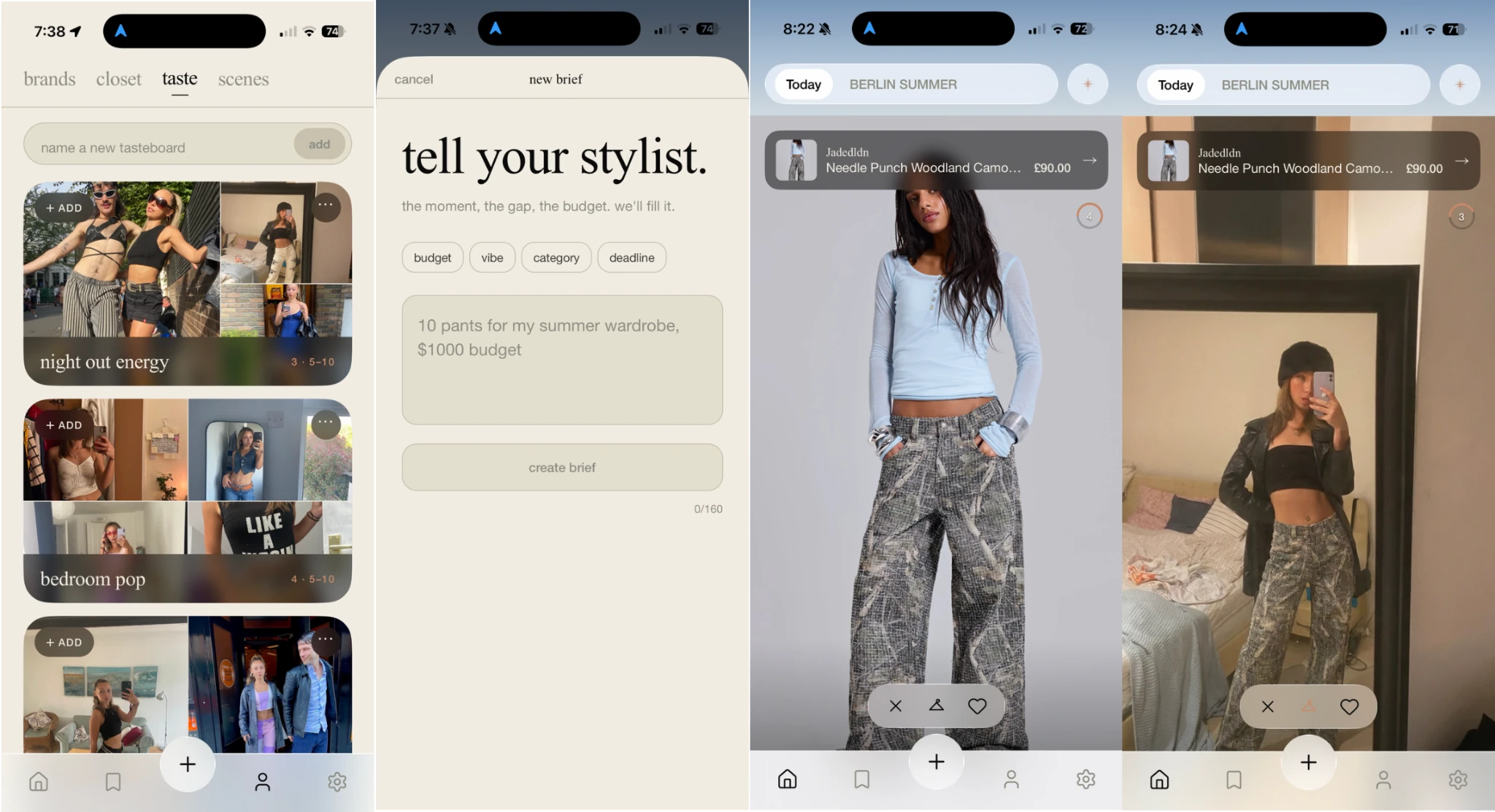
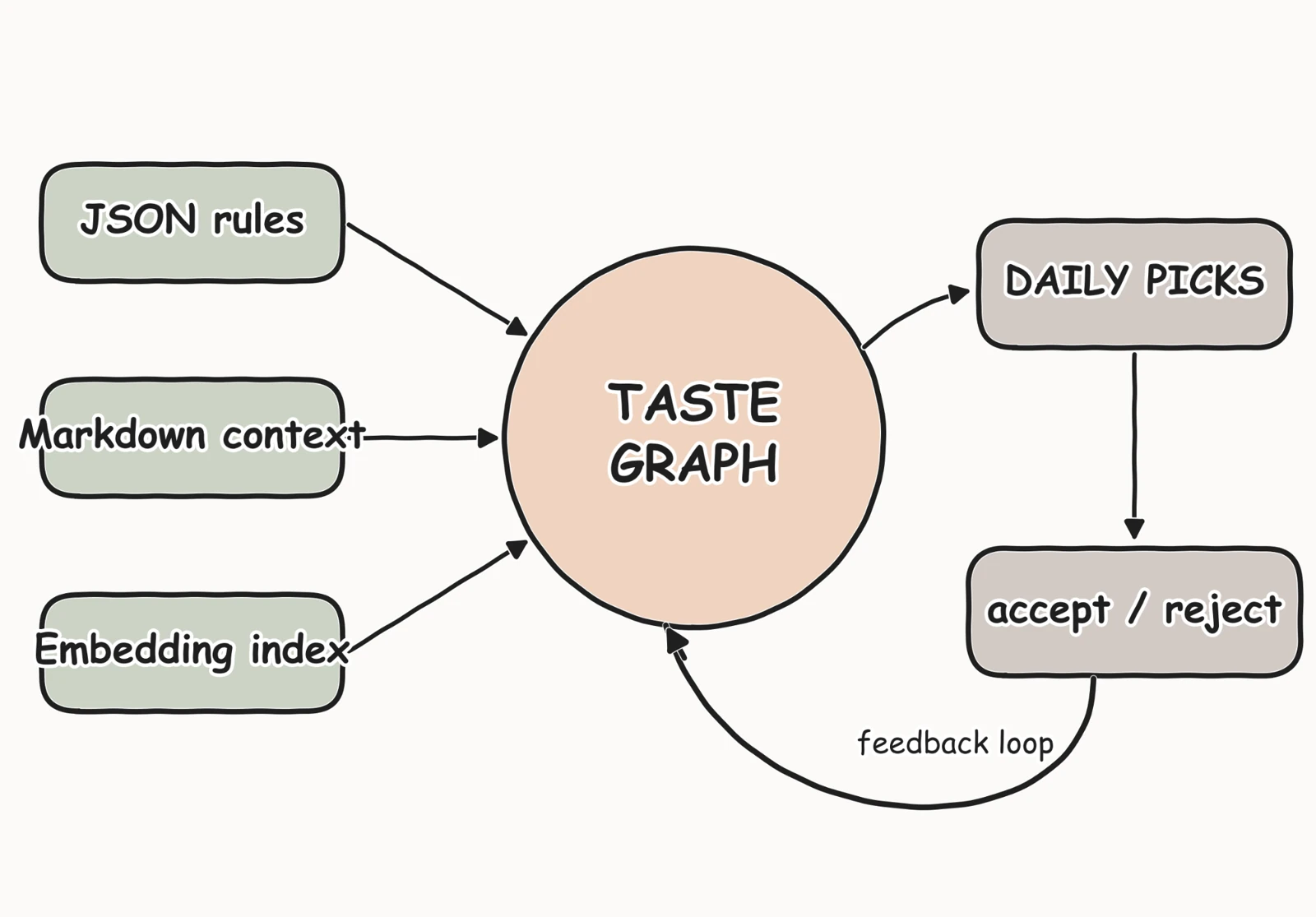
“Summer in Berlin” should mean different things to different people. Styled starts with a taste graph: silhouettes, colours, brands, references, and the price I’ll actually pay. It includes the things I’d never wear.
Each new item gets a compact description in the same format, so the system can compare the item with my taste before asking a model to reason about it.
Rules remove the obvious misses: sold out, wrong category, a colour I won’t touch. Image and text embeddings narrow the rest by visual fit, brand, season, and novelty. A diversity pass keeps the shortlist from becoming twenty versions of the same jacket.
Only then does a vision model look at the remaining images, my taste graph, and the last twenty things I saved. It picks the final set and explains why. The expensive reasoning comes at the end.
I can tell within seconds whether I’d wear something. That gave me a way to test the filtering architecture on thousands of inputs, with a result I could judge myself.
It tests personal taste matching. Whether two people would get along is a different question, and still an open one.
Visit StyledI wanted content ideas that came from watching what people actually respond to.
I built a system that studies creators’ videos, the words on screen, the opening, the cuts, and the comments underneath. It maps what happens moment by moment, so I can ask why an opening works and get back the source.
It also compares a post with that creator’s usual performance. A big view count alone doesn’t tell me much.
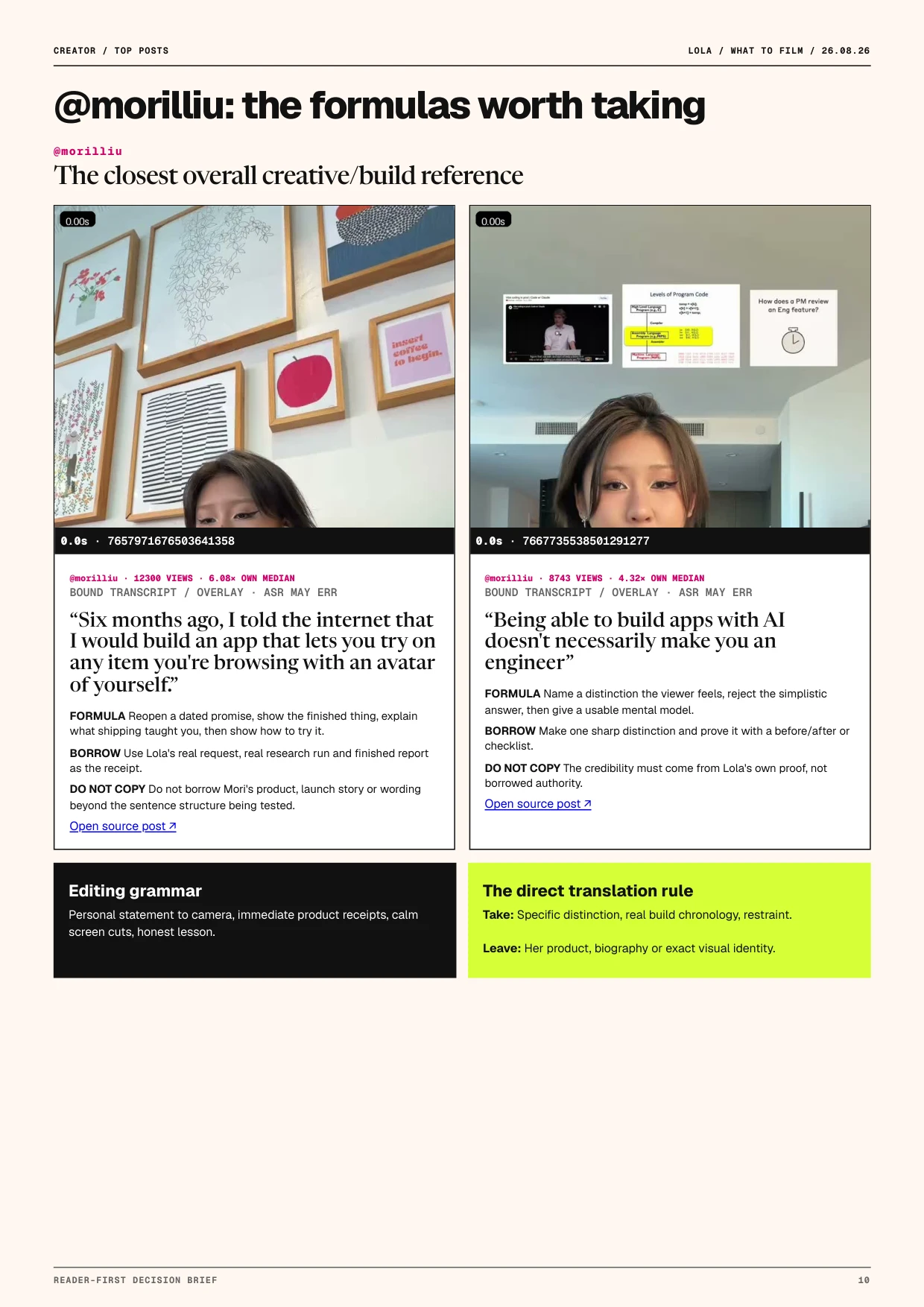
The useful part is connecting an audience question to something I can make: a small tool, a tutorial, a story, or a new way to explain an idea. Each suggestion needs a first frame, something worth watching for, and an actual result for the viewer.
This is an ongoing experiment inside Lola OS. I’m still testing which recommendations deserve to become posts.
More about Lola OSA Telegram bot for everything I don’t want to lose.
A voice note.
An article.
A video.
A half-formed thought.
The original.
The ideas inside it.
What they connect to.
An answer I can trace.
I send links, notes, and voice messages to one Telegram chat. The bot reads or transcribes them, saves the original, and links the ideas to things I’ve saved before.
I can ask it a question later without remembering where the thought came from. It searches a persistent knowledge graph, with a readable version in Notion.
It has a memory across conversations. An article about physics can connect to a design reference, something I’m writing, or a conversation I had months ago.
The same system now supports my creator research and a personal newsletter that draws from my interests. It’s a private tool I use and keep developing.
The reusable instructions I built after getting tired of explaining the same things to my coding agent.
Gives a project three files: what we’re building, how we’ll check it, and where we left off. Design quality is part of the brief.
Get Project Harness on GitHubKeeps the agent working towards a checkable finish. A fresh reviewer tests the result before it can call the task done.
Get Goal on GitHubThe final cleanup: review the changes, clear out scratch files, check for secrets, and get an independent verdict.
Get Ship on GitHubThese are portable editions of the skills I use. The collection includes setup instructions for Codex.
The collection on GitHubMarketing automation for Gen Z and millennial marketers and entrepreneurs.
Your in-house marketer.
I build you a marketing agent around your business: your audience, your voice, your goals. Research, plans, content, and performance live together in Notion, connected to the tools you already use.
Let’s build yoursYour tools, connected.
 Notion
 Slack
Slack Mailchimp
 Claude
 Codex
CodexKeep your positioning, audience, and priorities in view. Turn the latest research and performance into a focused plan for what to make, test, and change next.
Follow the creators and competitors that matter to your business. Analyse content, audience questions, and emerging patterns, then bring the useful findings into your Notion workspace.
Pull the numbers together, track what’s changing, and get a clear weekly report. I’ve built this as an ongoing decision board, with individual profiles and longer-term performance reviews.
Gather the month’s news, insights, and strongest content into a newsletter draft in Mailchimp. You review it, make it yours, and choose when it goes out.
Turn call notes, brand research, and content analysis into a brief with concepts your team can shoot. I built this workflow for a creative agency, using its own format and way of working.
We start with the work you keep doing by hand. I map it with you, build the system, test it with your real work, and get you comfortable using it.
hello@lolasasfi.studioA place for women to make things with technology.
NYC. Two hours. Every two weeks. Cocktails included.
Choose the creators, channels, and topics you care about. We’ll build an agent that follows content on TikTok, YouTube, and Instagram, then briefs you each day on the news, trends, and ideas relevant to your work.
Fashion, finance, science, culture, whatever your world looks like. You choose what matters and where to hear about it.
Send me the next dateAn NYC workshop for Gen Z and millennial women across disciplines. Artists, marketers, engineers, researchers: bring your way of thinking. I’ll help you get set up, and we’ll learn from each other as we build.
Every night focuses on one project you can take home and keep using.
Nothing here yet.
I’m based in NYC. I love technology, art, physics, philosophy, and people.
Come to a workshop, or get in touch if you’d like to work together.
hello@lolasasfi.studio